Showing posts with label Preschool science. Show all posts

Tuesday, May 26, 2015

Painting with Ice


Summer is just around the corner here and summer vacation has already arrived for some of our school aged friends. Here is one great way to continue some science learning and stay cool. Painting with ice!

Usually we only think about ice in the winter, but it makes for a fun summer activity too.

I mixed regular tempera paint with water so it was about equal parts water and paint. I used small plastic cups and froze them for about 30 minutes so they were slushy but not solid. I stuck the sticks in - some I had to prop up with other sticks to get them reasonably straight.

Then I waited. That was the hardest part. But to make them solid, I waited overnight.

Then I popped the plastic cup in warm water to unfreeze it just a tiny bit and then we painted. As you can tell, we only use primary colors and as the paint defrosted during use, we created secondary colors.

Tuesday, March 31, 2015

Science Books for Preschoolers

As I am most often hosted by libraries, I see a lot of science books for preschoolers. I kid you not most of them are not good. Some are outdated, other incorrect, and some are misleading.

One entire series stands out Let's Read and Learn.

I generally don't like science books with drawings, I really prefer photographs, but this series does an excellent job of illustrating science concepts authentically. This series started in the 1990s and still has new books coming out.

A number of titles as a question - and I love that. Science is about exploring and that must start with a question. I wonder...? How does that...? What happens if...?

Many of these titles are available at your local library - check them out next time you and your preschooler have a question

Monday, February 2, 2015

5 things to do in a blizzard - revisited

A while back, I posted about some fun things to do in blizzard. You can read them here. There are some fun ideas there but with temperatures hovering around 5' here, time outside with a little one is limited.

What is a simple and fun thing to do inside on a snow day?

Magnets - this is such a classic fun science topic. Magnets are one of the unseen forces of nature we can really explore with preschoolers. There are rule to learn like magnets have poles and you can only put opposite poles together. They have force meaning they can push or pull something without touching it. And we can learn these rules because they don't change.

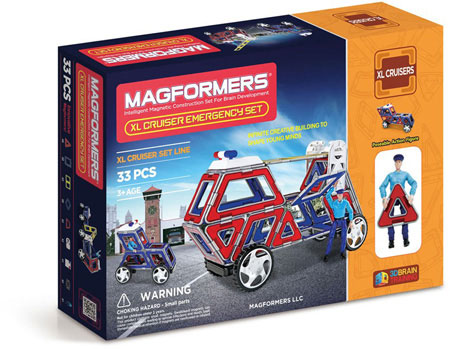
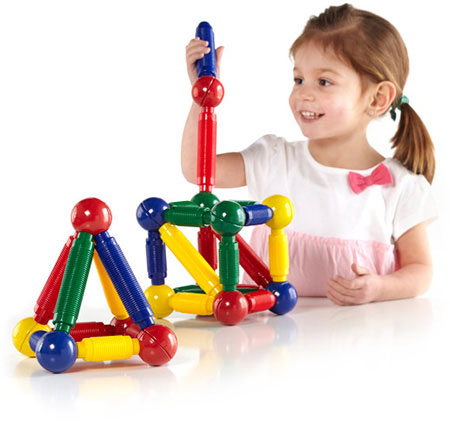
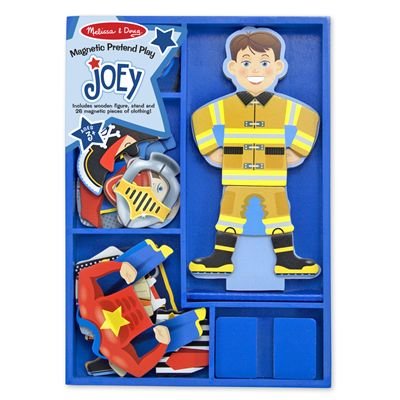
You probably have more magnet toys than you realize. (These photos are from Amazon and Fatbraintoys.com)

  • Thomas and other wooden trains are magnetic. So are some Bob the Builder toys from the same company.
  • Magna doodles 
  • Magna formers 
  • Guidecraft - better builder sets - this is one of my favorites with kids
  • Melissa and Doug - magnetic paper dolls - they have both girls and boys to dress
  • Magnetic fishing games - wind up travel sized and battery operated larger versions
  • Magnetic maze games
  • Wooly Willy - this uses a magnet to move around contained iron filings


Thursday, November 20, 2014

Dirt!


Geologists  use core samples of rocks and sediment to give them information about the rocks below the surface. We made our own "core" sample by adding dirt to a clear pvc pipe, shaking it up, and letting it settle. The heavier dirt dropped to the bottom and the lightest dirt floated on the water. 


We examined our dirt closely and compared and contrasted different dirt samples. This is a fancy science way of saying how things are similar and how they are different.  We had some great descriptive words here: cool, soft, hard, shiny, sparkly, smooth, and rough.


We also made predictions about how much water different kinds of dirt could hold. Then we tested our predictions. 


Finally we painted with dirt. Artist in the past used rocks and dirt to make paints. Different kinds of dirt make for different colors. 

If you want more dirt activities, go here


Tuesday, October 28, 2014

Going Batty!


We went Batty! today at the library and had lots of fun with bats. We learned a lot of facts and learned that we are a lot like bats. Thanks to Jodi at her blog for some of the bat facts we used. 

Photobucket


Bats are a lot like people. Both have hair, come in lots of colors, and eat fish. Only bats can fly and hibernate, while only people eat mac -n- cheese!

For other great ideas about bats and a few more facts on bats in New England, check here and here.

Wednesday, June 12, 2013

Make your own aquarium

In Messy Fingers we made pretend aquariums. This is a good sensory activity and just cool to play with. You can easily turn this into a rainbow activity by making seven aquariums in the colors of the rainbow if you have a larger group or space to keep them.

This project uses some rather surprising, but common,  ingredients. Here is what you will need:


Hair Gel - get clear if you can get it
Craft foam
Food coloring - if your hair gel is clear
Pen
Scissors
Baggie
Clear packing tape

 First cut out some fish. We picked bright colors that we thought would show through the gel easily and were a bit of a contrast to each other.

Next we filled the bag with gel. This took more gel that we expected. About half a cup or so.


We added enough gel to make the bag fairly plump but no so much we couldn't close it. 


 Then we put in some blue food coloring. We only picked blue since it looked like water. You can leave yours clear or mix two primary colors.


It only took three drops to nicely color the gel. 


We put a white paper behind the gel to show the color. While it didn't take much food coloring to get a nice color, it took us longer than we thought to get it well mixed.


Nicely mixed and the bag had a really good feel. It was a lot of fun to play with the gel just like this. If you wanted to make a rainbow of bags, stop here. This might be really pretty to tape to a window as long as it didn't get too hot.


We tucked the fish in. They had to be really maneuvered to get all the way in the gel. The floated on the top without a good push.


We tucked two fish, but use your imagination. Fish and a shark.... a starfish....a shell....octopus? There are so many possibilities. 


Ta Da! Our new fish aquarium. And this is one way to have fish that your cats won't eat. You can push the fish around from the outside and move the gel with your fingertips. It is quite addicting.

With really young children, I would recommend putting clear packing tape over the top of the bag. Some of the ones we made at the library had a bit of gel on the zipper and that seemed to invite oozing. This one, made at home, was dry and didn't leak.

Have fun exploring Pets!

Tuesday, May 28, 2013

Ants and a Giveaway!

Today at Messy Fingers we checked out ants and made some predictions about what we thought ants would   be attracted to.   

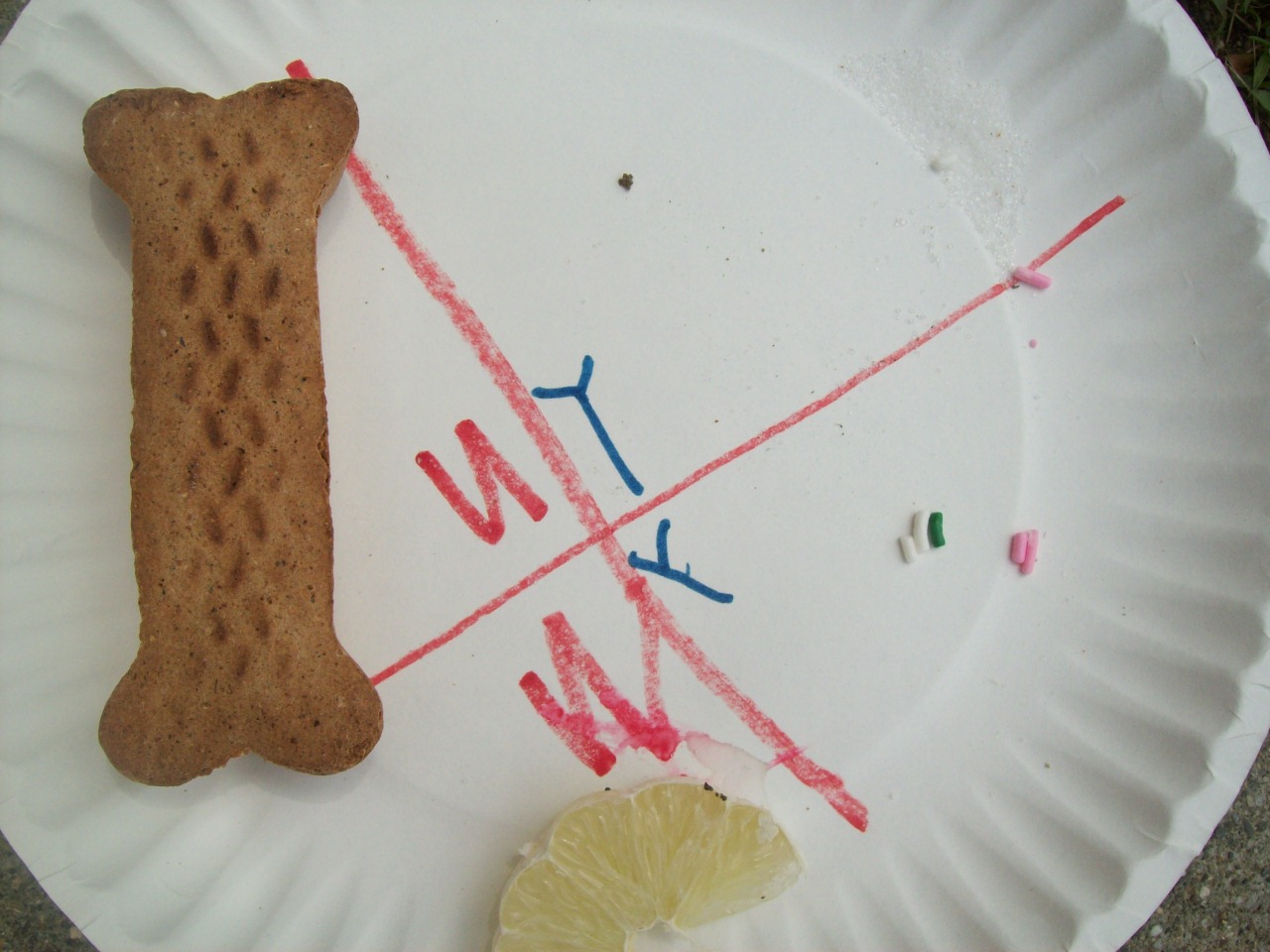
We put two things (more or less!) on the plate that we thought ants would be attracted to and marked that with a blue "y" and things that wouldn't be yummy to ants we marked with a red "n." You can see two little black specs about 7 o'clock on the plate above. C picked apple pie filling, banana, and candy as things that an ant would like to eat. She was completely correct about the pie filling. 


This was soda and a few ants came to investigate the puddle it made on the ground beneath the plate.

Now some folks say that cucumber peels and limes are ways to repel ants. Unfortunately, we really didn't have ants visiting many of the plates despite being in close proximity to many ant hills. I saw at least three different species of ant walking between the plates but most of the plates went unvisited by ants even after three hours of exposure. 


You can see some of the things the kids thought might or might not attract ants. They were very interesting and thoughtful predictions.


This scientist below brought chips from a picnic and the blob about five o'clock is chocolate syrup. Silly ants, why aren't they all visiting!


While this experiment wasn't as successful as we'd hoped, we've done plenty of other experiments that have produced more revealing results. 

Now for some new fun.  I am offering a basket of planting tools and seeds along with some books to a randomly drawn name from the comments to THIS post. One entry for commenting on a favorite Messy Fingers topic or experiment. You can get a second entry to the Giveaway by following this blog - just mention that in a second comment.

Winner will be chosen Tuesday June 4 at 10:30 am.

Good luck!!

Tuesday, May 21, 2013

Egg Update


Learning about metamorphosis, or change, is such a rite of spring that many school children have done the whole tadpole thing four or five times by the end of third grade. Tadpoles are pretty sturdy and easy to acquire so teachers are assured that things will proceed in a predictable manner. Jumping on that bandwagon, I planned to do tadpoles with the preschoolers at Messy Fingers in April. Eggs, tadpoles, frogs seemed like a nice logical way to celebrate spring science.

So I expected my eggs,  collected in our pond just like the previous six springs, to proceed in a standard sort of fashion turning into tadpoles and then getting legs... well you know the drill. But here is where science took over.

The eggs seemed be in a much smaller mass than usual so I was concerned that something bad was happening. And the mass was thicker feeling but that could have been the cold, I thought.

The eggs hatched right at Messy Fingers much to the excitement of the parents.  But the "tadpoles" didn't seem behave in the usual way. They were jumpier almost more fish like in their movements. A week later, it was very very clear what critters I had in my container.

Salamanders.

The external gills are a clear giveaway. Now this isn't entirely unexpected for two reasons. First every spring we hear wood frogs calling and they are an obligate species for vernal pools. Now that is a lot of big words and new ideas for one sentence. Vernal pools are ponds that are generally wet only in the spring so no fish live in them. This special wetland area is home to many unusual species that are obligate species, meaning they can only breed in a vernal pool.

And second, we found a baby spotted salamander in our back yard two years ago. They don't travel far from their birthplace and are also an obligate species.

Check out this website from Maine on Vernal Pools. They have a great coloring page comparing frogs and salamander life cycles.

The babies are going to have to go back to the pond very soon. Salamanders use the chemistry of the pond to find it again when they are adults and will only lay eggs in the pond they hatched in. I've been very careful to only put water from that pond in their tank.

Tuesday, May 14, 2013

Science for Dessert


My husband found a Girl Scout cookie knock off at Stop and Shop this week. He picked up a box of his favorite just to see what they were like and me, well, being me, thought "Hmm, let's turn this into science!"

So we compared the cookies. The Girl Scout Thin Mints are on the left. They were much darker and thicker. The Stop and Shop cookies were crisper.
So we each predicted which cookie we thought we would like best. Then we closed our eyes and someone else fed us a cookie. We circled our prediction (we all thought that Girl Scout cookies would be our favorite). 

The Stop and Shop cookies were very minty at first, but the minty didn't last long. The Girl Scout cookies had a minty flavor that lasted longer but wasn't as intense. 

Then we decided which cookie we liked best. We marked that with a check. So we were each right in our prediction, we all prefered Girl Scout cookies. 

Tuesday, April 30, 2013

May Sign ups and the Philosophy of Messy Fingers

May Sign ups are open at the library - call them at 508 865 1181. They will tell you that it is full but if there is actually enough interest, I will run a second session on Tuesdays at 12:30 or 1pm.  We are diving into spring science with Sun/Shadows, Pets, and Buoyancy.

I was chatting with Mrs. V, the director of the Library today after MF and we got on the subject of the philosophy behind some of the "rules" in Messy Fingers. A few new folks checked us out today, but didn't sign up for next month. We came to the conclusion that the Messy Fingers's attitude can be... well overwhelming to some folks.

My philosophy about inquiry-based science - where we ask a lot of questions, test those questions, collect data, and share what we learned - is rather simple. Science is a verb. In the vocabulary of teachers, this means it is an action word.

The only way to really practice inquiry-based science is to DO IT.  So that means that I will ask parents not to cut out stuff, not to put stuff together, not to rush through the process. Is this the easy way?  No. It isn't always neat, it isn't always going to work the first time, it takes longer, and it is messy. But it is the very best way to really understand science and to live it.

So this comes out in some unexpected ways  like "No chairs for kids" because if you are sitting, you are passive and MF is so not passive. In fact, it is anti-passive. When you are sitting on the floor you are more likely to participate and be a part of the group. Mom or Dad or Grandma are more likely to be involved in the activities when they are sitting on the floor or actively engaged in our activities.

And I do ask parents to get involved. Your observations are  not the same as your childs and can enrich the discussion. Every child needs an adult to share discoveries with and to be a companion on science adventures.

So let's embrace the mess and do some science.

Monday, April 22, 2013

Happy Earth Day and...

something is happening to our frog eggs.  After spending time away this weekend, I checked on the babies. This is what I found.

Instead of little spheres in the eggs, there are little comma shapes in them.

So what does this mean?

It means that the eggs hatches and the frog babies are now embryos. They are starting to look like something, but it could be anything!
Here is a close up and can see that they do look like embryos - there is a darker backbone and a head. They are going to be living off the yoke of the egg for a while. Frog eggs spend about three weeks as embryos so we should have tadpoles soon!


Tuesday, April 9, 2013

Guests

These are some of the guests we had at the library today. They helped us learn about metamorphosis. Metamorphosis means to change and these little guys change into tadpoles and then in to frogs.

I borrowed these frog eggs from a pond behind my house. Not the big pond but a much smaller pond nearby. Every spring, or least since I've live here, we've found frog eggs in the pond. This year there were about the same number of masses as usual, but each mass was smaller. In the past, there were hundreds of eggs per mass and now, as you can see, the number is much smaller. Yep, that is an entire mass in the picture ~ about 30-40 eggs.


I will hatch these babies and keep you informed. Before they get their back legs I will return them to their home pond and hopefully listen to their mating song next spring. 

Want to get your own eggs or tadpoles? Check out this blog post on some guidelines for keeping tadpoles.

Thursday, April 4, 2013

Bean Seeds

I planted bean seeds with preschoolers a couple of weeks ago. Four seeds I placed seam down and one seam up to see if there would be a difference in the plant.

These are my bean seeds after three days. Only one had sprouted.

This is how it looked in the window.
The beans are facing the window. My south facing windows don't actually get that much sun because the roof of my porch  shades them, so this is facing west.

Planting beans or other large seeds like this is a great opportunity to see the entire plant as it grows. The paper towel in the baggie keeps the seeds moist and the shelf of staples keeps the seeds from getting too wet. Once they have leaves, open the bag and plant or continue to water them. If you leave them in the bag to grow, you will need to feed with plant food in the water.