Tuesday, March 22, 2011

Turtle Tuesday


This is me holding a baby painted turtle who wandered into my backyard. We have a big snapping turtle who tries to lay eggs in our back yard from time to time. I've never actually caught her laying the eggs, but I have seen her dig. We had a painted turtle lay eggs near our garden last summer. It was an amazing moment to see her put the eggs in the tiny hole.

Turtles off an opportunity to talk about symmetry. You can make a symmetrical turtle with a coffee filter, some cotton swabs, water color paint, glue stick and some scrap paper.

First fold the filter in half. Now dip a swab into some damp water color paint. Dab it onto the filter. When you are done, open up the filter. The design will be repeated exactly on the other side. This is symmetry - the same on both sides.

You can use scrap paper to add a head, arms and a tail.

What other animals are symmetrical? Are you symmetrical?

Check out the last post on Fun Fact Friday about turtles here.

Monday, March 21, 2011

Animal of the Week - Blue Tongued Skink

Image from www.reptileweb.com

There are five different groups of reptiles and a lizard is one. On Saturday, I had the opportunity to meet a Blue Tongued Skink.

Unlike many other lizards, the Blue Tongued Skink doesn't move very quickly, so to evade predators, it sticks its blue tongue out to scare them.

They are native to Australia, New Guinea and Tasmania. The female gives birth, not to eggs like most lizards, but to live babies like humans do. Cool.

Thursday, March 17, 2011

Fun Friday Fact

The tongue of a blue whale weighs more than an elephant.

Thought you like to know that.

Challenge: Make a Flinker

Can you make a flinker...

something that neither floats nor sinks?

Fish, submarines, and SCUBA divers are all examples of flinkers - the science term is neutrally buoyant.

Try it in the tub or sink tell us about it!

Tuesday, March 15, 2011

Floaters and Sinkers

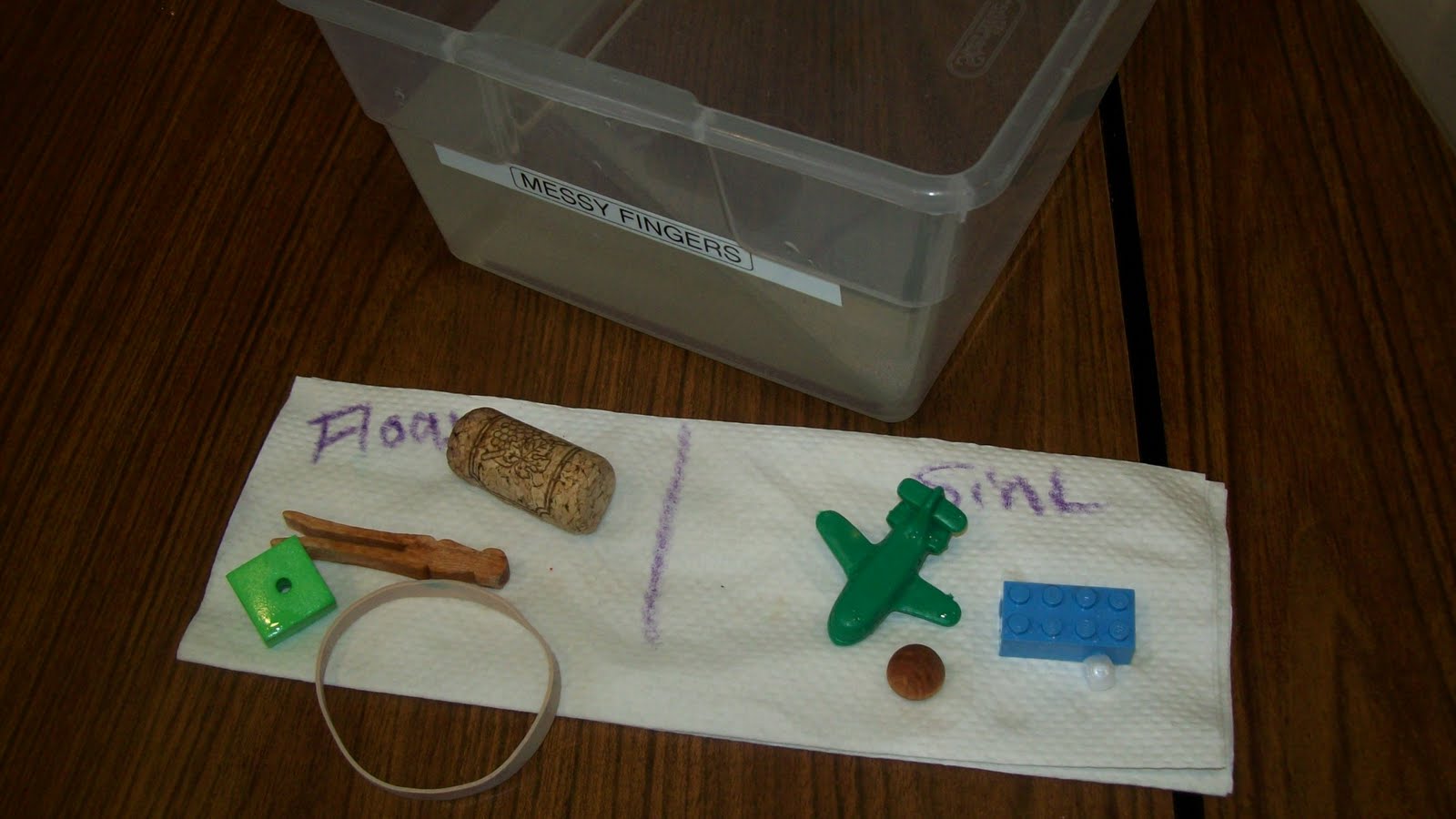
We had a great, wet time today playing with floaters and sinkers. First we gathered stuff that we thought would either float or sink. These were our predictions which is a fancy science word for guess.

We recorded our predictions in a small notebook. I was really impressed with the variety of ways that the kids recorded their predictions from tracing the objects to drawing with different colored crayons.
Then we tested our predictions. This part was great fun. We used another science tool, tweezers, to reclaim our objects from the water.

We double checked our predictions and found that for most part, our predictions were correct. We did have some surprises. The rubber bands did not float. A few folks thought that the Legos would sink and were surprised that they float nicely.

Our final challenge was to make a boat that could float as many pennies as possible. One participant, Lucas, was able to float 23 pennies on a piece of tin foil!

If you want to check out some other things to float and sink, go see my previous post here.


Monday, March 14, 2011

Animal of the Week - River Otters

Image from Marylandzoo.org

River otters will live in all kinds of water, not just rivers. They like to have fresh water where they can swim, hunt for prey, and play.

On land, they use their senses of smell and sight to find they prey. They eat fish, amphibians, crustaceans and if they can catch them, small mammals.

When they dive in the water, otters use their sensitive whiskers to find prey.

River otters like to slip and slide in the mud and snow.

Locally, check out the Blackstone River Bike Trail for otters. I have seen them there twice.

Friday, March 11, 2011

Fun Friday Fact

Squirrels have a sweet tooth.

Red squirrels will bite the bark of sugar maples in the spring and lick the sap. Yum.