Wednesday, April 13, 2011

Experiment with Eggs

How can you make an egg float?

Take a boiled egg and put it in water. The egg will sink nicely.

Now add salt to the water and keep adding it until the egg floats. It will happen, just keep stirring.

What is it about salt that helped the egg float? Salt changes the density of the water. The boiled egg is denser that water so it sinks. When the salt is added, the water becomes more dense and the egg floats.

Book Review: The Easter Egg


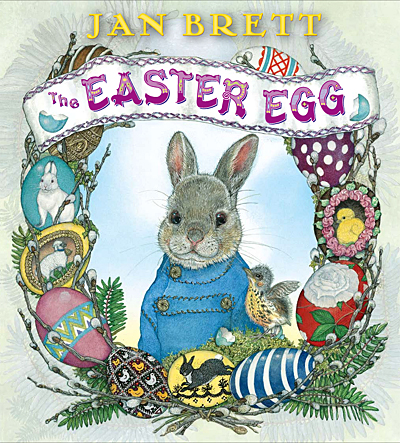
The Easter Egg by Jan Brett - image from JanBrett.com

My daughter brought this home from the school library recently and it was such a sweet book, that I thought I would share.

Hoppi wants to have the most special egg to share with the Easter bunny but he ends up getting side tracked when a mother Robin needs his help. I really loved the illustrations. Jan Brett always does an excellent job of accurately representing the animals she draws. Aside from the clothes, she is very accurate in her drawings.

Which egg turns out to be the most wonderful egg is a beautiful choice and the egg rides in a place of honor with the Easter bunny.

4/5 stars.

Ms. Brett does have a book about chickens called Daisy Comes Home where a chicken is the heroine. I haven't read the book yet, but the pictures I've seen make it sound like a fun book to read as well.

She has a paper chicken chain activity on her website here.

Monday, April 11, 2011

Animal of the Week - Chickens

Image from mypetchicken.com

We are surrounded by marshmallow chickens and chocolate bunnies this time of year so it seems fitting that we learn a bit about the real animals. This is a picture of a Polish breed - they are small and only lay two eggs per week.

An adult male chicken is a rooster and an adult female is a hen. Babies are called chicks.

Even though chickens are birds with lovely feathers, they cannot fly very far or very well.

There are over 100 different varieties of chickens and many lay eggs that are not white. Some lay pink, blue and even polka dotted eggs.

Chickens are omnivores and will eat seeds, nuts, small insects, worms and fruit.

Fun Friday Fact

A group of frogs is called an Army of Frogs!

And most frogs are already in camouflage. How cool is that?

Thursday, April 7, 2011

Book Review: From Tadpole to Frog

From Tadpole to Frog by Wendy Pfeffer.

This is part of the Let's Read and Find Out Science series and Level 1 books are designed for preschool and kindergarten aged kids. They are great books in general and this is no exception. The vocabulary might be a bit tricky for most beginning readers, but we all need a little help from time to time with big science words.

This book has illustrations rather than photos. I do prefer photos for non-fiction but these pictures are well-done and accurate.

4/5 stars.

Wednesday, April 6, 2011

How to: Keep Tadpoles

Keeping tadpoles is easy. You need a container to keep them in. I like to see them so a clear-sided container is a must for me. Make sure it is clean and well rinsed. Keep the container in an area away from direct sun so it doesn't get too hot. I like glass because it is durable, but I have used plastic bug houses like this for short visits. They are quite inexpensive and have nice handles for transport.

Just about any pond in southern New England, where I am, has frog eggs in early April and tadpoles in May and June. Check along the edges along branches or plants growing out of the water. Use a small bucket or a pan taped to a pole to reach farther into the water.

Gently scoop out some pond muck and check for tadpoles. They generally move around quite a bit after you’ve scooped the water. Be sure to take algae and plant material from the same pond to feed the tadpoles.

No matter what you collect, put them back in their home when they have legs and still have a tail. They need to re-acclimate to their home before leaving the pond.

Tuesday, April 5, 2011

Animal of the Week

Green frog - image from Bug Girl's Blog - http://membracid.wordpress.com/

It is National Frog Month and this week we are celebrating FROGS!

Frogs are an important part of our ecosystem. They eat bugs - and that is just one of the things that is really important about them. Frogs breath through their skin as well as their lungs. Chemicals or pollution in water ways can damage or kill frogs. They warn us about environmental problems that are water related.

And they are just so darn cool.

Mama frogs lay eggs in ponds, lakes, puddles, and in some places, in flowers. The eggs hatch and become tadpoles. Then they need to become frogs to hop out of the water.

Frogs come in all sorts of colors. The one at the top of the page is a Green Frog, but frogs can be red, yellow, green, blue, brown, orange, and even purple.